A Room Reset Between Two Short Classes
A room reset between short classes clears table clutter, restores sightlines and gives the next group a clear place to begin.
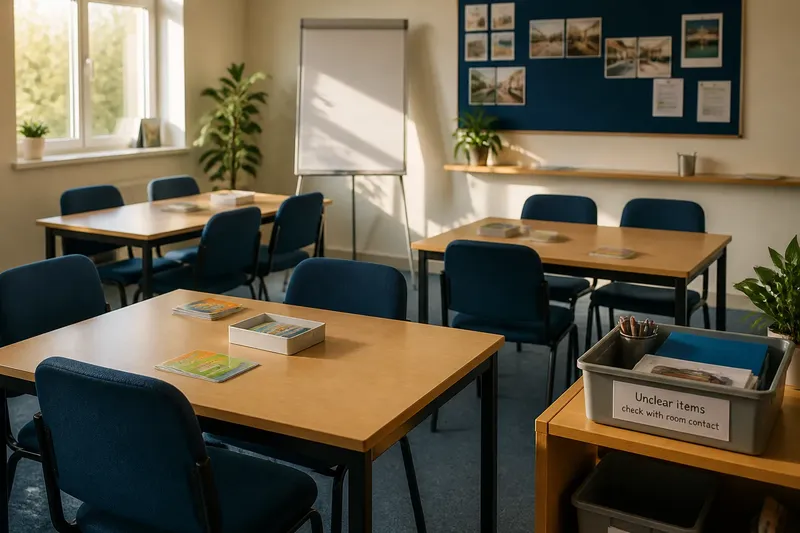
A room reset between short classes works best when it solves the next group’s first few problems, not when it makes the room look immaculate. Shared tables, leftover materials and chairs turned towards yesterday’s activity can leave arriving learners unsure where to sit or what to touch. A short, deliberate reset gives the next session a usable starting point.
The central task is to hand over the room, not to recreate an ideal layout. Begin with what the next class needs to see, reach and do, then address the clutter that gets in the way. This order is useful when one tutor is packing away as another is setting up, and when the room has no dedicated storage or caretaker between sessions.
Why does the next group inherit a muddled room?
Confusion usually comes from an incomplete handover rather than a shortage of effort. The outgoing class may leave a layout that suited its activity but does not suit the next one. Materials may be stacked together without a clear distinction between what is reusable, what belongs to learners and what should stay out. Chairs can remain pointed towards a previous focal point.
Each item is easy to overlook because it seems harmless on its own. Taken together, they make the next tutor spend the opening minutes interpreting the room instead of welcoming people. Treat the reset as a transfer of useful information: where the next group should gather, what they can use, and what should remain untouched.
What should be cleared before anything is rearranged?
Start by removing items that do not belong to the next session. Return shared tools to their usual storage place, separate learners’ personal belongings from communal materials, and keep any work that must be collected or displayed out of general reach. If an item’s owner or purpose is unclear, set it aside in a visible holding spot rather than guessing.
This first pass prevents a common nuisance: moving clutter from one table to another and calling it tidy. It also protects the incoming tutor from having to decide whether a worksheet is spare stock, someone’s work or material that has simply been abandoned. A small labelled tray can make a useful temporary holding place, provided it does not become a permanent museum of unidentified objects.
Why do tables still feel wrong after a reset?
Tables are often returned to a familiar arrangement without checking what the next group will actually do. Rows may help learners face a board, while clusters may support shared work; neither is automatically right. The problem is a layout chosen by habit rather than by the session’s first activity.
Before moving furniture, identify the first task and the point learners need to see. If they will listen to a brief explanation, keep a clear line of sight to the tutor or display. If they will work in pairs, place seats so people can turn towards a partner without twisting around another table. Leave a clear route from the entrance to the available seats, and avoid placing supplies where people must cross the room to fetch them.
Say the next class is a small group practising conversational English around shared prompt cards. The outgoing session has left tables in forward-facing rows and a flip chart beside the entrance. The incoming tutor could turn the tables into pairs facing one another, move the chart to a spot visible from each pair, and place one stack of cards on each table. The expected result is that learners can find a partner, see the prompts and begin without crowding around a single pile.
How can sightlines be checked without a full rehearsal?
Use the seats learners will occupy as the test, rather than judging the room from the doorway. Stand or sit at the farthest likely position and check whether the tutor’s speaking spot, board or shared display is visible. Look for obstructions such as tall supply boxes, coat stands and a screen left at an awkward angle.
Then check the route between the entrance, seats and materials. A room can have clear sightlines but still feel difficult to enter if bags, chair backs or a trolley narrow the path. Think of the layout like a drawer: each item can fit, but opening it is pointless if everything catches on the way out.
Do not try to solve every possible seating preference in advance. Make the main activity visible and leave a modest choice of seats where the room allows it. If a learner needs a particular position or an accessible route, the tutor can adapt the arrangement with them rather than treating the first layout as fixed.
What if materials are missing, mixed or left out?
Separate materials by their next use, not merely by their appearance. Put the items needed at the start of class together; return shared equipment to its usual place; and keep supplies that need checking out of the learners’ immediate workspace. A tray, labelled folder or distinct corner of a side table can help, but the arrangement should make sense to someone who did not pack the previous session away.
When a required item is missing, do not spread unrelated materials across every table in the hope that it will turn up. Check the agreed storage place and ask the outgoing tutor or room contact if they are available. If it remains unavailable, tell the incoming tutor plainly so they can adapt the opening activity. A clear note is more useful than a mysteriously empty space where the equipment was expected to be.
Which room-reset problems are worth solving first?
What if the next tutor arrives before the tables are reset?
Agree on the parts of the layout that matter most, such as a clear entrance route and a visible teaching area, then let the tutor handle any remaining adjustments. A rough but understandable handover is more useful than silently moving furniture while the next class is gathering.
What if the room must serve two different activities?
Keep the shared starting area simple and place only the first activity’s materials within reach. If the session changes format later, the tutor can make that transition with learners rather than asking them to enter a room already arranged for a task they have not heard about.
What if nobody knows where leftover items belong?
Use one agreed holding place and make the uncertainty visible to the room contact. Do not invent a new permanent storage system during a rushed handover; an improvised home is quickly mistaken for the official one.
What if chairs and tables cannot be moved freely?
Work with the fixed arrangement by clearing surfaces, turning movable chairs towards the main focal point and placing materials where they can be reached without blocking the route. If furniture movement is restricted, follow the venue’s instructions rather than trying to force a better layout.
How can the handover stay brief and clear?
Keep a small reset routine that follows the same practical order each time:
- Remove personal belongings and return shared materials to their known storage places.
- Set aside unclear or retained work in one visible holding spot.
- Arrange tables and chairs for the next class’s first activity.
- Check the view from the least favourable seat and clear the main route.
- Put only the opening materials within easy reach and tell the next tutor about anything missing or uncertain.
This is a prompt, not a demand for identical rooms. The incoming tutor may need a different arrangement, and the routine should leave room for that. Where the venue has specific rules for furniture, storage or access, follow those rules and ask the room contact about any uncertainty.
What makes a room reset between short classes useful?
A room reset between short classes is useful when the next tutor can tell, at a glance, where the group will gather, what is ready and what still needs attention. It need not erase every trace of the previous session. It should remove the decisions that do not belong to the next group and make the remaining choices easy to see.
One brief note can finish the handover: name the item left aside, identify the missing supply or mention a layout constraint. That small piece of context prevents a tidy-looking room from becoming a puzzle. The room is ready when the next class can begin with its own work, not with an investigation into the previous one.